
Fake “Unauthorized Access” Wallet Notifications Targeting Users
Recently, I encountered something interesting — and potentially dangerous — that highlights how cryptocurrency scams are evolving.
While using a crypto wallet app, I received what appeared to be a legitimate security notification:
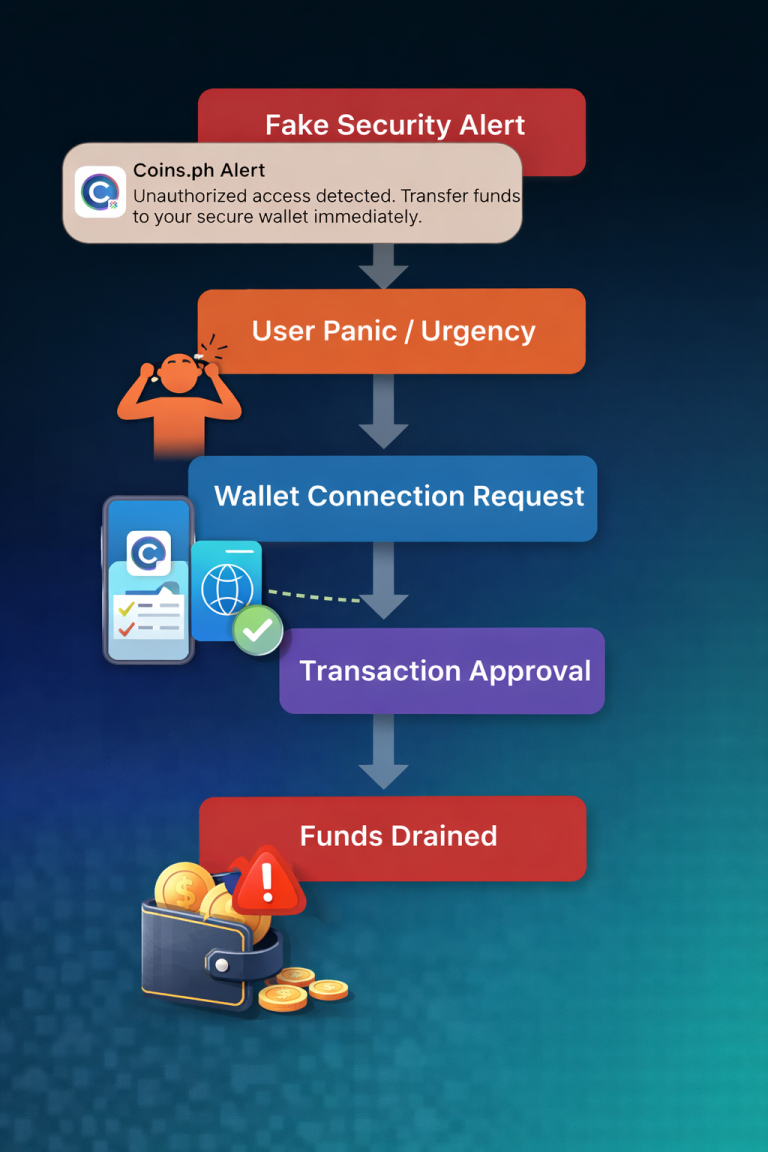
“Coins.ph Security Alert – Unauthorized access detected. Transfer funds to your secure wallet immediately.”
At first glance, the message looked authentic. It carried familiar branding, appeared within the app notification system, and created urgency — all elements typical of a real security alert.
However, the behavior behind the alert suggested something more concerning.
This incident highlights a growing cybersecurity threat in the crypto ecosystem: wallet interaction phishing attacks.
How This New Crypto Scam Works
Unlike traditional phishing attacks that attempt to steal passwords, crypto scams now focus on tricking users into authorizing transactions themselves.
The attack usually follows this sequence:
1️⃣ A notification warns of suspicious activity.
2️⃣ The user is told to secure their funds immediately.
3️⃣ The system prompts the user to connect another wallet.
4️⃣ The user approves a transaction or signature request.
5️⃣ The attacker gains permission to transfer assets.
Once this happens, funds can be drained within seconds.
Because blockchain transactions are irreversible, recovery becomes extremely difficult.
Why These Attacks Are Increasing
Crypto platforms rely heavily on wallet authorization rather than password authentication.
This creates an opportunity for attackers to manipulate users into approving malicious requests.
Attackers often rely on three psychological triggers:
Urgency
Messages imply an active security threat.
Users feel pressured to act quickly.
Familiar Branding
Notifications appear to originate from legitimate apps.
This lowers suspicion.
Security Framing
Instead of asking for money directly, attackers frame the action as protecting your assets.
This tactic dramatically increases success rates.
The Wallet Connection Trap
In decentralized ecosystems, connecting a wallet is a common step when interacting with:
- decentralized applications (dApps)
- NFT marketplaces
- token swaps
- DeFi platforms
Attackers exploit this normal behavior by creating fake prompts that mimic legitimate wallet connections.
Once connected, malicious contracts can request permissions such as:
- token spending approvals
- NFT transfers
- smart contract interactions
- wallet signatures
Many users unknowingly approve these requests, believing they are verifying their account.
How to Protect Yourself from Wallet Phishing
There are several best practices every crypto user should follow.
Do not react immediately to security alerts
Pause and verify alerts through official sources before taking action.
Avoid connecting wallets to unknown prompts
Always confirm the request originates from the official website or platform.
Review transaction details carefully
Check the smart contract, permissions, and destination addresses before approving anything.
Use hardware wallets
Hardware wallets require physical confirmation, adding an additional security layer.
Revoke unnecessary token approvals
Regularly review and revoke permissions granted to smart contracts.
The Bigger Cybersecurity Lesson
This experience highlights a broader trend in cybersecurity.
Attackers are increasingly relying on behavioral manipulation instead of technical exploitation.
Rather than hacking systems directly, they manipulate users into authorizing malicious transactions.
As blockchain technologies continue to evolve, security awareness must evolve alongside them.
Final Thoughts
Crypto wallets offer powerful control over digital assets — but that control comes with responsibility.
Notifications like the one I encountered serve as a reminder that not every alert is what it appears to be.
Security in the Web3 era is not just about protecting passwords.
It is about understanding the systems we interact with and recognizing when something feels wrong.
In many cases, the strongest defense remains simple awareness.
